Robot Description: ulixarm_description
The URDF model of the Ulixarm, with visual and collision meshes and dynamic parameters computed from the CAD model. It is used by the API for gravity compensation and can be loaded in any URDF-compatible tool (Pinocchio, MuJoCo, simulators, visualizers).
Source: github.com/itacarobotics/ulixarm_description
(also included as a submodule of ulixarm_cpp and ulixpy).
Configurations
Three ready-to-use URDF files are provided:
| File | Configuration |
|---|---|
arm.urdf | Arm only |
arm_gripper.urdf | Arm + gripper |
arm_gripper_camera.urdf | Arm + gripper + camera |
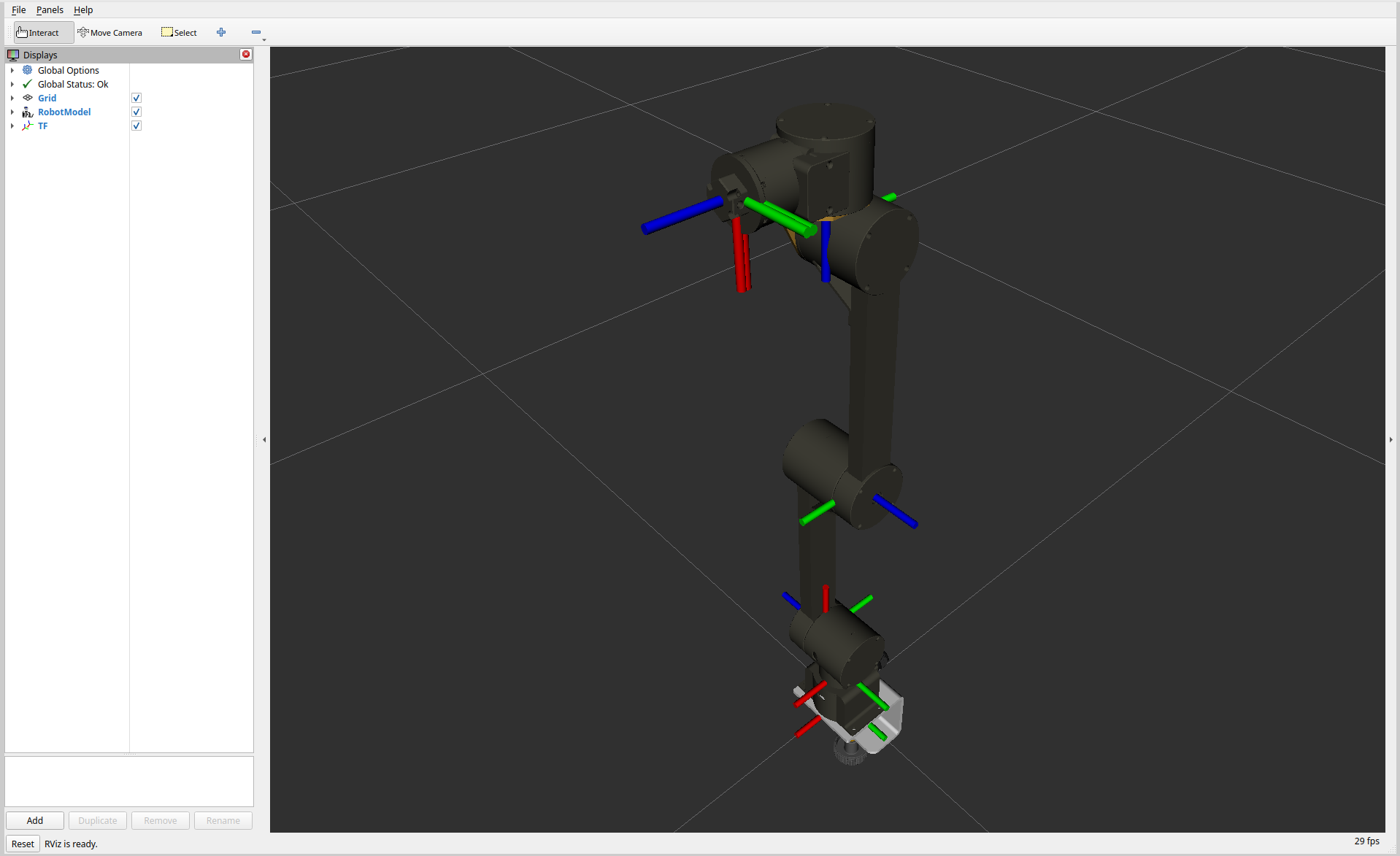
Arm
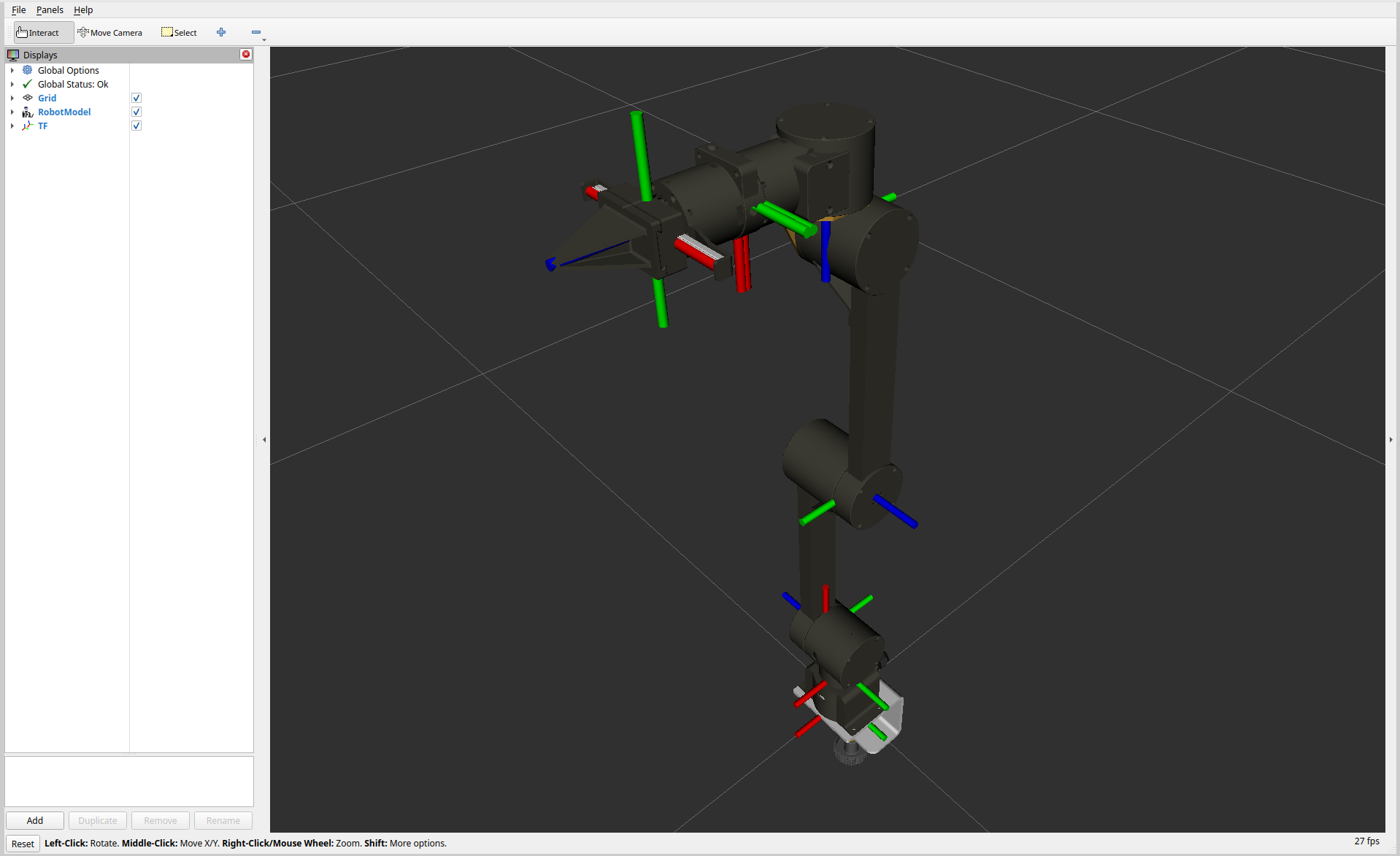
Arm + Gripper
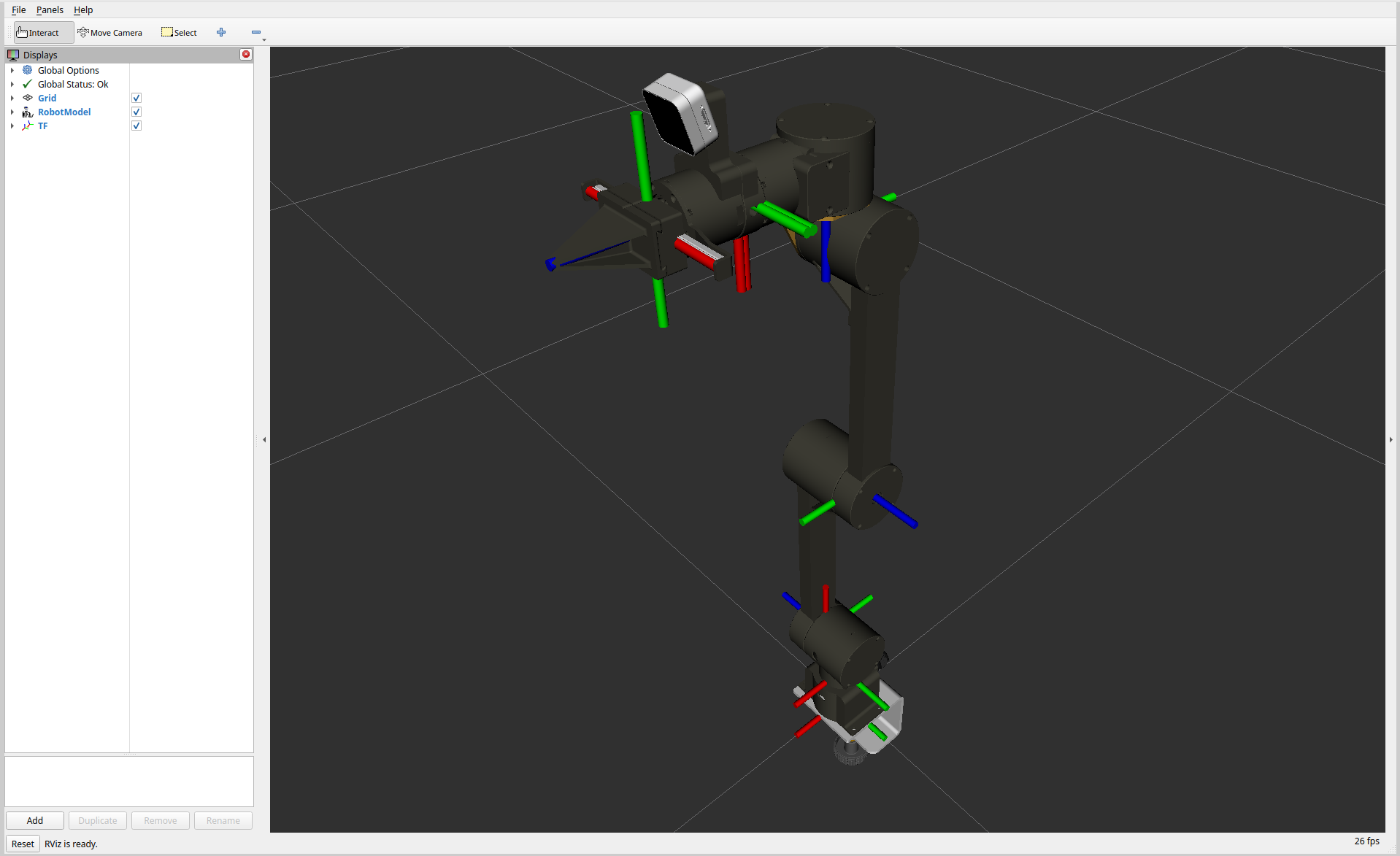
Arm + Gripper + Camera
The API picks the right file from the gripper and camera constructor flags
(see UlixArm()). To use your own copy, set
ULIXARM_DESCRIPTION_PATH or pass urdf_path to the constructor.
Repository layout
ulixarm_description/
├── assets/
├── src/
│   └── ulixarm_description/
│       ├── meshes/
│       │   ├── collision/
│       │   └── visual/
│       └── urdf/
│           ├── arm.urdf
│           ├── arm_gripper.urdf
│           ├── arm_gripper_camera.urdf
│           ├── robot.urdf.xacro
│           ├── gripper.urdf.xacro
│           └── manipulator.urdf.xacro
├── LICENSE
└── README.md
The .xacro files keep the description modular: manipulator.urdf.xacro (arm),
gripper.urdf.xacro (end effector) and robot.urdf.xacro, which assembles them.
Meshes
| Visual | Collision |
|---|---|
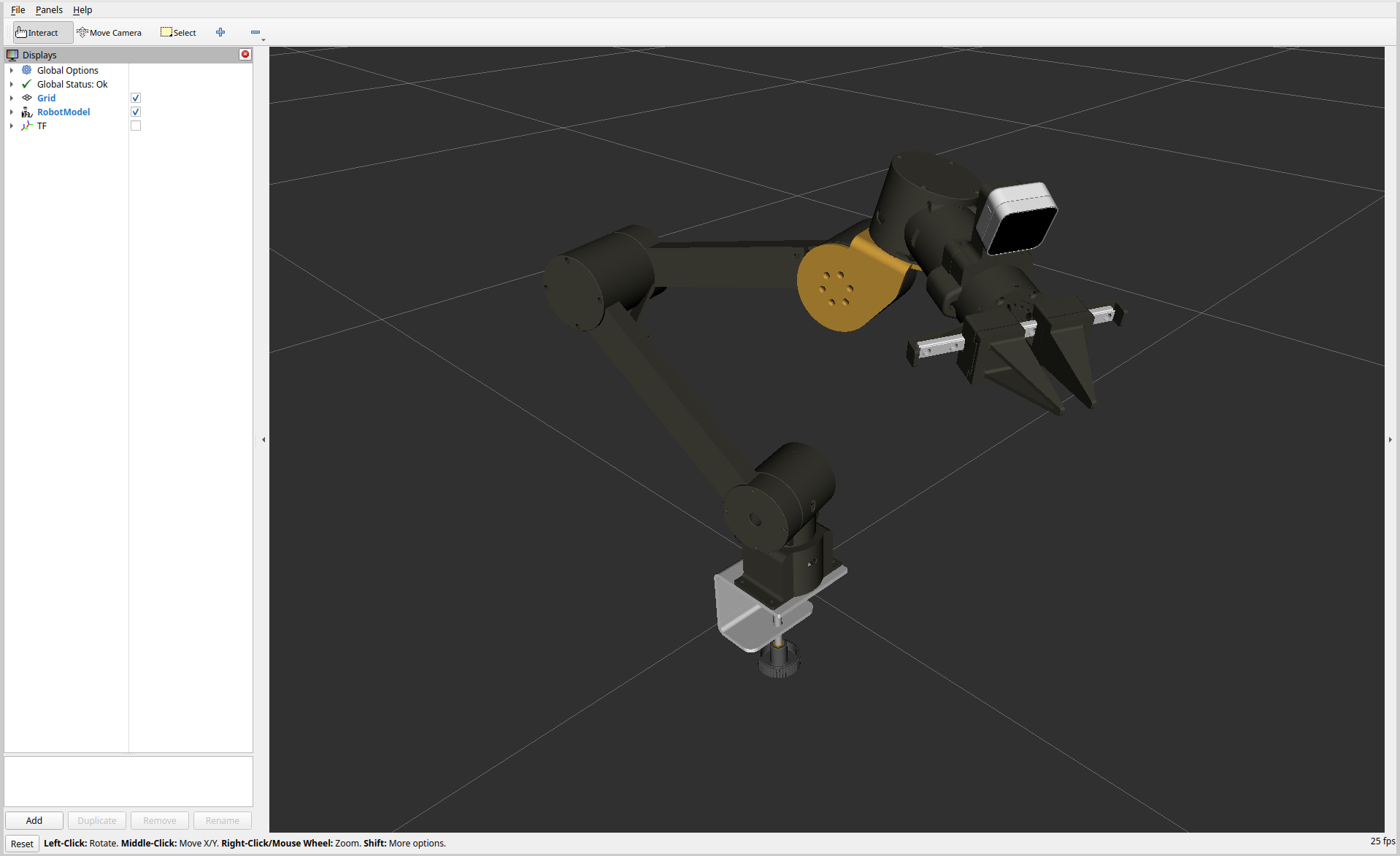 | 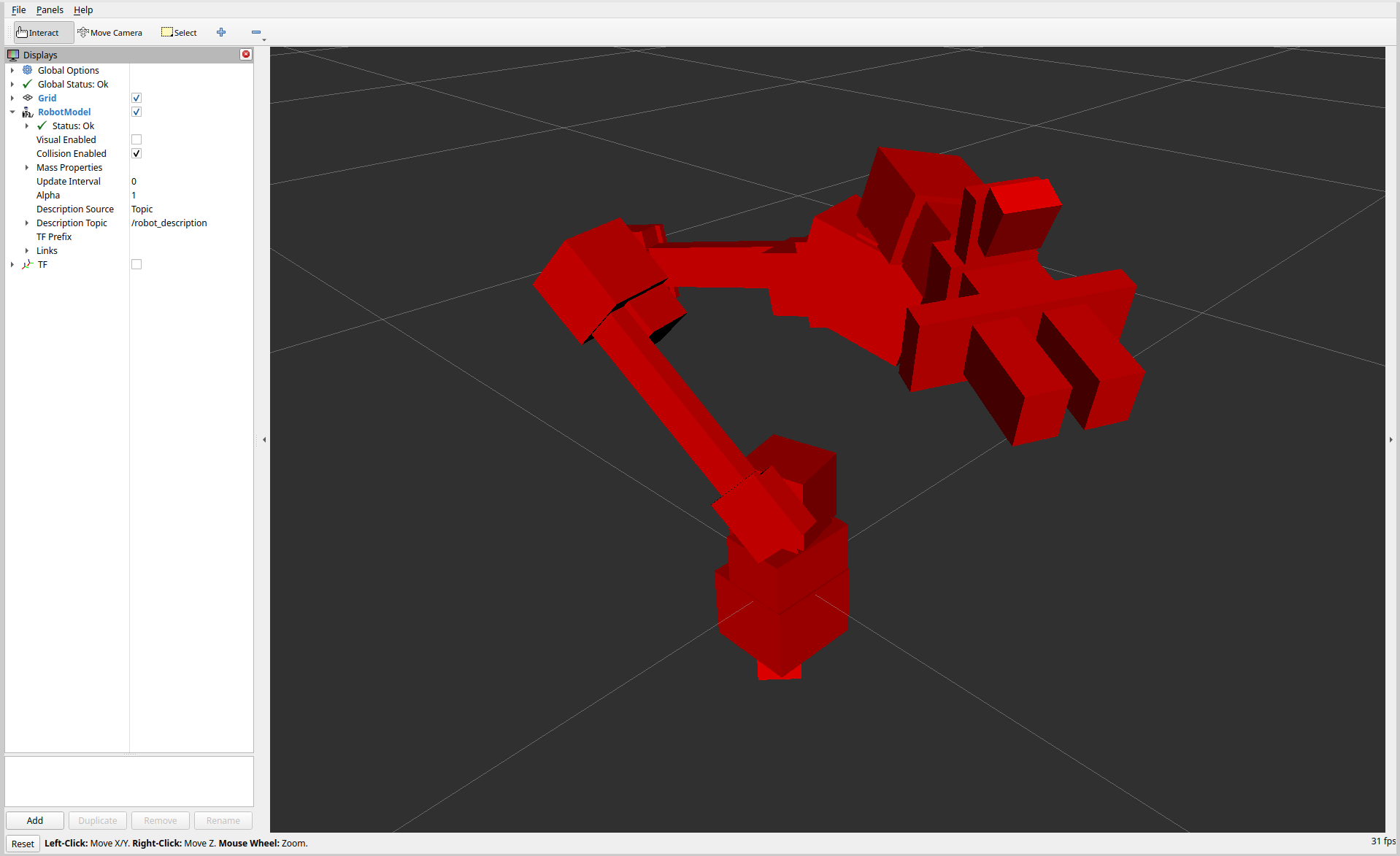 |
Loading the model
With Pinocchio (installed together with ulixpy):
import pinocchio as pin

model = pin.buildModelFromUrdf("arm_gripper.urdf")
data = model.createData()
q = pin.neutral(model)

g = pin.computeGeneralizedGravity(model, data, q)  # gravity torques [Nm]
print(model.nq, g)
Regenerating the URDF files
The three .urdf files are generated from robot.urdf.xacro with
xacro. Regenerate them only if you change the .xacro sources.